Showing posts with label The Special Parent's Handbook. Show all posts

Thursday, 21 January 2016

Getting my Oomph Back

Today, for the first time in more weeks than I care to remember, I finally got some of my oomph back and it feels good. Since late November, it feels like I've been hibernating in some wilderness of exhaustion, and barely able to string a sentence together on the worst days. I've had moments when I've wondered if the cancer is closing in and about to draw the curtains on me, but now I can see it wasn't really anything to do with the cancer itself, it was a wake up call that I badly needed to listen to. 

It started with my joints seizing up to the point whereby my legs simply wouldn't weight bear. For about three weeks getting from one room to another downstairs was a twenty minute marathon of pulling myself along from one piece of furniture to the next and then the wall. Leaving the house was nigh on impossible, and worse than that, I was so exhausted I didn't even care. 

Twitter twittered on without me, emails came and remain largely unanswered, Christmas approached in a blur of mind-fog and I wasn't even able to do very much in the way of joined up thinking. I couldn't follow TV programmes much less keep going in a book, it was like I was in some sort of shut-down mode. 

The walking bothered me though. Mobility has been an issue ever since I had chemotherapy three years ago, and it's also massively affected by the cocktail of cancer drugs I've been lumbered with. I've managed to get a pretty good perspective on it though, by counting my blessings and knowing that losing some ease of movement is actually a very small price to pay for being alive and loving it.  However this was on a different scale, and yes, it bothered me a lot. Eventually I swallowed my pride, went on Amazon, did the research and bought myself a walking frame. 


However I didn't have the guts to tell anybody. For days. Until it got to the point that i knew it would arrive and everyone would say "Hey, what's that?" and I was mortified about having to tell them. Well if I was mortified about telling the people I trust the most in the world, how was I ever going to be able to leave the house with my head held high as if I didn't give a stuff, and wander down to the shops with a jaunty little saunter, eh? 

So I blurted it out over dinner one night, and the very next morning it arrived. The family was marvellous, and I needed them because I didn't have the strength to assemble it myself although I gave it a flipping good try. They were kind enough not to laugh out loud when we realised I'd put the wheels where the handles ought to have been - no wonder I couldn't get the damned thing to push properly on it's maiden voyage between the dining room and the kitchen. Once they took over and put everything where it's supposed to go, everyone rallied round to be as upbeat and cheerful as possible about my new little purchase. Have you ever seen anyone skateboard towards the front door on a walking frame? I have. Hilarious, and they did their best, but it still hurt like hell and I was still too proud to really let on how close I was to dissolving into wretched tears about the whole damned thing. 

I've done it though. I've been out in public with it several times, and eventually I'm learning to develop yet another new perspective about it. I have a choice - either go out and be a part of the world with a helpful piece of metal on wheels, or become a housebound hermit. No brainer really, and one day I might even love it. 

A few days before Christmas things started easing. I was able to get up and downstairs without crawling or bum-shuffling. Wow. It felt wonderful. I could nearly walk all the way to the kitchen from the front door without having to stop and catch my breath. Fantastic. 


Things went from good to better for three whole days, long enough for me to do speed-shopping on Amazon for presents, and then I got ill all over again. A cold turned to a chest infection and lingered for for four full weeks, determined to put me in my place and make me come to some pretty life-changing conclusions. At least with the chest infection the brain fog cleared and I was able to think. I was even able to read and managed more books in less than a month than I got through in the whole of last year. 

The thinking - now this is the exciting bit. Pennies started dropping, lightbulbs started lighting, and everything became loads clearer and much more possible - life wasn't over, but it has to be done a little bit differently to make sure I don't ever hit quite such a wall of exhaustion again. 

So what have I learnt? Lot of things! Here are just some of them. 

1. I've got secondary breast cancer and I'm not 22 anymore. So kidding myself that I can cope on 5 hours sleep or less a night isn't going to work long term. Some days over the past couple of months I've slept for over 15 hours in one stretch, because I needed to. I've even worked out that I'm more productive and can get much more done without having to stay up half the night to achieve it. 


2. I've been doing too much, taking on too much, and I've worn myself into the ground. 2016 is the year I'm going to learn to say no sometimes. 


3. I'm very clear about what I want to do to improve things for the next generation of vulnerable adults and children with special needs and their families. I'm much more focused, I'm working on a business plan, I'm redesigning my website, and I'm looking into starting up a Social Enterprise business to put things on a much more solid and settled basis. That way, one day there could be a team of people working with me towards the same purpose and I won't have to do everything all by myself. One day, if it goes well and I'm no longer around to do the work myself, other people could carry it on. 


4. I need help now to cope with all the admin. So I'd like to introduce my first helper, my wonderful daughter, Francesca, who is going to take on one or two of the projects we want to achieve. We're working together for a few weeks to see how it goes, and so far I'm loving it and I hope she is too. 

5. Shoes. I love them, but finding ones that fit now my feet have spread to the size of dinner plates is not easy, and nor do they make those sizes with high heels or in bright shiny colours. For the past two years I've only had two pairs of shoes, one for winter and one for summer, simply because I'm such a funny shoe size now. So I spent a whole afternoon on line, I found some specialist shoe shops, and I ordered and ordered and ordered. So exciting now to be the owner of 5 pairs of brand new shoes that all fit and don't pinch. OK so they all look just like the sort of convent-issue shoes that the nuns in The Sound of Music might have worn, but maybe I'll start a brand new fashion. 


6. I'm a writer who is massively into social media and who may have a limited time left on this fabulous planet.  So why have I been working on a limping old clunky PC that takes what seems like a lifetime and a half to open pages and crashes several times a day? I've been telling myself I can't afford anything better, but the truth is I can't afford not to. So I'm now the proud owner of a state-of-the-art laptop that whizzes from screen to screen in a nano-second. Consequently I'm buzzing along too and able to work much more efficiently and without the tearing-my-hair-out technological frustrations I've been coping with for the past two years. 

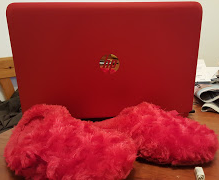
7. The laptop is a shiny bright red. So are my new pair of Christmas furry slippers. They nearly make up for the nun's shoes. It's so last year if your slippers don't match your laptop, don't you think?


8. I've read and I've read and I've read. Among the novels that I needed to take me away from real life as respite, I've read business books and cancer books too. Radical Remission by Kelly A Turner has changed the way I look at everything. It's helped me start to think about implementing new ideas which just might increase my chances of staying alive a good deal longer. I'm already on borrowed time. When they discovered my cancer had spread my prognosis was to live for another 26 months. That date came and went over 6 months ago.  With the help of this wonderful book, I'm now aiming to extend that original 26 months into another 26 years. Yay. 


9. Whether I make it or not is immaterial. What's important is that I'm still here, I'm still alive and I'm still taking part in a hundred and one different things and living life to the full. Over the past few weeks I've had moments of doubt about whether or not the grim reaper was lurking. Well I'm pretty sure he's gone away for the time being at least. But I'm not going to make his job easy by twiddling my thumbs and waiting for him to come back. He'll have to wait for me. Ha! 

10. Working and trying to change the world is all very good, but life is about having fun and spending time with people we care about too. Pacing myself and having some balance is vital, and I've been guilty of throwing myself headlong at everything over the past year or so - it's an easy trap to fall into when you think your days are numbered and you feel there's so much to do. I've still got goals I want to reach, but I'm now more likely to stop for a coffee on the way. 


If you are one of the many people who have been waiting weeks for an email from me please accept my apologies, and I'll be in touch again very soon. I'm back now, and raring to go, but at an ever so slightly slower pace. You might even get to meet Francesca and my walking frame - I really must find a cheery new name for it. 


      Are you on Facebook? If so, have you seen the  
Coke Floats & Chemo Facebook Page, offering support, information, news and hope to anyone coping with cancer, sharing the best relevant posts nearly every day?

                I also have another Facebook Page called The Special Parent’s Handbook. It’s full of information, advice and support for families of special needs children


     Yvonne Newbold
Yvonne Newbold named by HSJ as a Top 50 Inspirational Women in Healthcare 2014
Learning Disability Today - Learning Disability Champion 2015

Author of "The Special Parent's Handbook" 


Wednesday, 26 August 2015

Serendipity and Social Media as an NHS Change-Maker

Serendipity
Don't you just love a bit of serendipity? A string of random events which position themselves around each other to have a huge collective impact. For me it's been a hospital appointment, a book I've read, some workshops, a totally unexpected invitation and some great Twitter conversations. Together they've pushed me out of my comfort zone and made me think about everything a little bit differently - and I'm loving it. 


A World Gone SocialThe book was startling in the effect it's had on me. It's a long time since I've picked up a non-fiction book that was so good I could barely put it down, and every time I turned a page there were yet more light-bulb moments and flashes of inspiration waiting for me. Please read it if you get a chance, and I'd love to know what you think. It's called "A World Gone Social" by Ted Coine and Mark Babbitt, and their take on the way the world is changing has given me a new perspective on so many aspects of life. 

It's about how huge an impact social media is having on society, even though social media is new. No one knows quite where it's taking us as a society, but it's definitely here to stay. It's breaking down barriers and changing the way we communicate. It's giving ordinary people unprecedented direct access to the movers and shakers right at the top of every organisation in the world. It's giving a sense of power and control back to individuals as never before - it's loosening the structured formality of society, which is taking democracy to a whole new level. 

Some of us love it. We can find like-minded people, people we'd never have med 10 years ago, people we can share ideas and visions with. Partnerships are being formed with people who otherwise would never have met. Career opportunities are being created and all sorts of projects are being initiated which would never before have got off the ground. We can build support networks with invaluable peer support, something that has been a godsend for me. I'm part of two online communities now, one comprised of other parents of special needs children and the other of other women who also have breast cancer. 


No more Hype and Spin
However, social media is bigger than that - it's reflecting a whole shift in the way people think, and what we want from life.  We have evolved as a society. We are all heartily sick of hype and spin. We've had decades of the wool being pulled over our eyes with glossy marketing campaigns and clever advertising. We can see through it all, and we want transparency, accountability and honesty. 

Twitter and Facebook have an authenticity which has been the missing piece of a jigsaw for many of us. There is an honesty and authenticity about how people come across on social media - there's a shared vulnerability that facilitates seeing each other's true character in a way that sometimes takes much longer in real life. There's a simplicity about it, a shared purpose, and a real community where trust easily turns into friendship. 


Yes there are trolls lurking who want to cause upset and trouble, and there have been some pretty high profile incidents of this reported in the press. However, there are some pretty unpleasant  people everywhere, in every walk of life, and there always have been. Bullying is everywhere, but on social media something very interesting is often happening when someone is attacked online. People aren’t tolerating it, they are standing up and being counted, and supporting the those who are being targeted. They are looking out for each other – a new solidarity of fairness, kindness and thoughtfulness is emerging – and people are fighting back in the face of bullying in a way that the same people are reticent to do in schools, workplaces and on the streets of the real world. 


As people, we have spent so long trying to impress each other and big ourselves up. Yes, there is still a fair amount of that on social media, but there is also a new spirit of openness and vulnerability which is very exciting. People are beginning to feel more collaborative and less competitive. It’s subtle, but it’s happening, and it’s growing.


Changing the shape of Hierarchical Organisations 
It’s changing the way companies are working, again it’s only just beginning, but in the book there are so many examples of real life shifts in business practice that it feels that there is a very exciting new way of doing things everywhere that is on its way. These companies which are leading the way in working differently are becoming flatter in their structure, removing layers of management roles, and giving staff more autonomy and personal responsibility. There is trust, and most of all, there is kindness coming back into the workplace. Rules and regulations are being relaxed – when people are too micromanaged they become fearful, stressed, and less productive. It’s a movement, a shift, which is tangible yet still in its infancy – but the signs are there that this could be big.

In the same way that hype and spin are now out-dated, people are also sick and tired of policies and procedures and tick-boxes taking precedence over people and what we, as individuals, need for a sense of well-being. 

I read the book in virtually one sitting – barely able to put it down because it so totally captured my imagination. Then when I finished it the thinking began. If the future is being led by social media and a more collaborative approach, then the past is defined by huge corporations with rigid controls on working practices, where staff are ruled by fear and stress. The sort of place where bullying can go unchecked because everyone’s too frightened to whistle-blow. Somewhere like the NHS in fact.


I love the NHS
I love the NHS. I know it well - too well - and without it I wouldn't be here and nor would my son, Toby, or my wonderful Dad. However I'm a realist, and I know it's not perfect, with some very good bits and some very less than good bits too. More often than not it's down to the individual staff member to whom you are assigned, and their ability to engage in a compassionate and caring way. 

The NHS workforce is unique. It has huge talent - an army of fiercely intelligent, highly motivated, intensively trained and precision skilled individuals. The vast majority purposefully chose a career in healthcare because they care about people, they are intrinsically kind-hearted. 

Many staff, despite years of the frustrations of working with policies, procedures, pathways, processes, rules and regulation, are still simply fabulous. Just as in social media, there are some pretty unpleasant members of the public these people have to deal with on a daily basis, and yet they still have endless reserves of tolerance, kindness and patience. They know how frightened we, the patients often are, and they have the capacity to listen properly as we voice our fears. They offer comfort and inspire our trust in them.


When Kindness & Thought is Forgotten
Some staff are less kind and less patient. Eyes roll to the ceiling, harsh words are spoken, and thoughtless things happen. As we know, there are difficult people everywhere, but those within the NHS can have a devastating impact on a patient’s well-being.

I encountered two very difficult moments during my recent hospital procedure, and being a very experienced patient, neither incident shocked or surprised me. What warmed my heart was that, of the 7 members of staff responsible for my well-being that day, 5 of them were wonderful.

The other two? I was apprehensive, particularly since, for clinical reasons, I was unable to be sedated, something that is generally standard practice for this procedure. When I arrived in the room, I heard every word of a disparaging discussion already underway about me, and one member of staff was very clearly expressing his irritation that I was going to be conscious throughout.  Turning to me, this person then said “Oh we’ve decided to be brave today have we? I hope you know it’s going to hurt”. Not exactly the sensitive, caring approach I’d hoped for.

Later in recovery, finally a nurse approached me where I was still lying on a trolley, and closing the curtains told me I could get up and go home. She then walked away. I have limited mobility. Sitting up on the trolley without help, particularly since I was still in pain and disorientated, was a fairly major ordeal, and then when I swung my legs over the side of the trolley I realised that my feet were nearly six inches off the ground. I’m not quite five foot tall, and I really didn’t know how I was going to get off that trolley without falling. Very gingerly I had to edge forward, and slowly lower myself, lunging at the wall close by to break my fall as I finally jumped the last couple of inches. It must have been in my notes that I have bone cancer. A simple gesture of a hand being extended to hold onto, or a step moved into place that I could have stepped onto, would have been the work of seconds but would have made an enormous difference to my struggle.

I obviously took far too long in getting off the trolley. This person returned a few minutes later and flamboyantly opened the curtains before checking whether I was still there or not. I was. And half naked. 


Why is Kindness Forgotten?
Neither encounter with these two individual staff members was pleasant, yet I don’t blame them. Kindness has never been prioritised as a stand-alone essential element of care within the NHS, and it's hard to measure, so it simply might not occur to everyone that it has both value and importance.

Yet it is kindness that patients remember. That, along with staff taking the time to listen and to exercise a little thoughtfulness.  Has anyone ever stood outside a hospital with a clipboard asking people, as they leave, a simple question - "Was anyone unkind to you today?" Not to my knowledge, but they'd learn a lot if they did. 

The NHS is a huge, clunky, unwieldy machine of an organisation. It has policies, procedures, pathways and processes coming out of its ears. Central Government is always adding new expectations. Staff are subject to so many rules and regulations and new guidelines and initiatives that they are effectively doing their job with their hands tied. The priority has shifted away from people - both staff and patients - to such a degree that it's now much more about working for the legal department, covering the organisation's back in case of future litigation. The amount of paperwork every member of staff is expected to do has long ago passed the tipping point of ridiculousness. It's a case of one minute at a bedside now means that nearly 10 minutes is spent writing down every nuance of that bedside conversation. The complexity of the bureaucracy is suffocating real care. Staff are frightened of putting a foot wrong. Sadly, less and less of the things they are doing is about good old-fashioned patient care. It's more and more about filling out forms, jumping through invisible hoops, and being too frightened to do their job with any real heart and soul. 

As the largest health provider in the world, the NHS has created a pretty unhealthy working environment. Fear breeds distrust, people shut down, staff feel unsafe and vulnerable to being accused of wrong-doing. Worst of all, when people feel unsafe, the perfect conditions are created for bullying to come into its own, and it does, I've seen it. 

I know quite a lot about the NHS and I've had far more than my fair share of value from the organisation. For the past 3 years I've had constant on-going intensive treatment for Stage 4 breast cancer. Toby, my middle child, spent most of his first six years in hospital, with me living alongside him 24/7 throughout every admission. The severity of his disabilities and complex needs meant that we had countless outpatient appointments, therapy appointments, community health care teams, carers, nurses working for long shifts in our home - you name it, I've seen it. I've seen great things happen but I've also seen everything else too. 

So have thousands of other patients and their families. We have so much knowledge, insight, experience and answers between us that could really help heal the NHS and get it back into working order again. Yet nobody asks us what we really think, and it's very difficult to get our thoughts across. The NHS need supportive people working alongside them, critical friends who can highlight simple, cost effective changes.

Kindness costs nothing, and yet it is priceless. That’s the irony of the situation – good care and bad care don’t cost the same, good care is far less costly because fewer errors are made and everything works more efficiently. It isn’t just a patient issue either, it’s a colleague issue too. A new culture of kindness has to begin with staff working together, being kind to each other, looking out for one another and extending thoughtfulness in the workplace. Just like what happens on Twitter. 


Co-production
There is a new initiative towards "Co-production", whereby patients are invited to work with NHS staff to develop new ways of doing things together. There is a tremendous new-found will within the NHS to involve patients in a lot of what they are doing, but it's not working. Again, a lot of patients can instinctive see why it's not working, but there is no mechanism to feedback to the NHS, or to help them find better ways of making co-production work. 

Loosening the Steel Grip of Micromanagement
This steel grip of micromanagement has to be loosened. Not overnight, but in manageable stages. Of course there must be checks and balances, of course there must be excellent record keeping, but there has to be room to innovate and some freedom of thought too. Low morale is endemic right across the workforce, and staff are stressed and unhappy. Unhappy people don't work productively. No wonder some of them don’t practice kindness. What is amazing is that most of them do.  

Twitter Leading NHS Change
What we are seeing happening already on Twitter is the spirit of what can happen in the NHS. Individual staff members getting their share of some power back, having a voice and coming together, supporting each other in kindness and being a united force for good. 

Society is changing, and I'm hopeful that it's a good change that is on its way. The NHS needs to embrace these changes and implement them throughout, from the top down and from the bottom up. Hierarchical organisations such as the NHS are going to become out-dated dinosaurs in the next decade or so unless they find significantly different ways of doing things. Change has to come from within, but may have to be kick-started from outside, and with difficult truths being spoken by ordinary people like you and me. 


NHS England Leadership
I believe that the NHS has already seen the writing on the wall and is fully committed to changing. I have met several of the NHS England Leaders, and they are a breath of fresh air in their energy, vision and optimism. They can see how it is and how it needs to change, but it's a huge task ahead and one that they know needs a complete sea-change in culture. 

My New Series of Workshops
I want to help. If I hadn’t been doing so much reading, thinking and recovering, I’d have finished designing my new series of workshops by now. Based around the themes of my book,  “The Special Parent’s Handbook”, they are aimed at groups of NHS Employees, to enable them to better understand the aspects of care which make a real difference to patients. The workshops are designed to share stories, to give participants an opportunity to step inside the shoes of a patient or a relative, and to really get to grips with important issues such as working with families as a team, kindness and back-to-basics simplicity. The series of workshops will cover different topics of interest to particular cohorts of staff such as Paediatric Clinicians, Commissioners, Frontline Medical Staff and Student Clinicians. Additionally, there is one workshop to build confidence among staff for when their patients have and Intellectual Impairment or Autism, and another workshop looking at better ways to build Models for Co-Production. Maybe I should write another one about the importance of change and how social media can lead to where we all need to go?


Underpinning every workshop is a spirit of kindness, where I will create a safe, supportive space in which participants can be open with each other, listen to each other's experiences and stories, and share their best bits. There are thousands of people who feel like I do, both inside and outside the NHS, wanting positive change, and believing it can happen As I said earlier, I love the NHS, and even if I can only be a tiny drop in the ocean, I want to do everything I can to make it better, to heal it back to health. 

Embracing Change

Not everyone is ready to embrace social media, and many large organisations find it threatening. Yes it is likely to change the status quo, but in a way that should be beneficial to all of us.

If the NHS is to successfully make the changes that this social revolution is heralding, it needs its staff to be on board, and for them to feel comfortable in leading the way. Already there are thousands of NHS employees on Twitter, and from every sector and seniority level across the board. They are learning to bring down barriers and to embrace diversity of opinion and a new spirit of collaboration. As their numbers grow, they will bring this new-found spirit of openness back into their work stations with them, and in time it will take hold throughout the whole NHS.

These people are the pioneers, the forward-looking change-makers, the ones the NHS so badly needs on board.

#We Nurses
There’s a great group of nurses on Twitter who use the hashtag #wenurses. Earlier this week I joined in their weekly online chat and they were so welcoming. The topic? "What tips would you share to encourage other nurses to tweet?" Some great conversations followed, and really helped me to sharply focus on the main issues.

Nurses were talking freely, exchanging ideas, supporting each other, pooling their thoughts, pulling together - just how every corner of the NHS could work without the limitations of over-reaching rules, regulations, intimidation and fear. Yet the fear was still there - lurking in the shadows. Nurses felt that many of their colleagues are too frightened to tweet for fear of being accused of saying the wrong thing. There was a lot of discussion of what guidelines should be put in place for nurses to follow, and whether that would give more nurses the confidence to join in the on-line discussions. 

The NHS is rule-bound. Twitter is the complete opposite. The NHS needs its staff to lead the way towards a social model of doing things, and staff should be encouraged to take part in online debate without having to abide by petty rules. Nurses are sensible people. They know what they can and can't say in public. One or two may overstep the mark perhaps, but one or two probably do already and say too much when out with friends. You can't restrict the freedom of everyone just because a tiny minority might occasionally step out of line. There has to be trust. There has to be personal responsibility. Rules will curtail freedom, spontaneity and authenticity. Anything they’re “allowed” to say will become meaningless.


Also, who would set these rules for Twitter? At the moment the world is made up of two types of people, those who are embracing social media already, and those who are cautious, skeptical and would like to make it all go away. That's true right across the spectrum, this isn't a specific NHS issue.

However, it’s the skeptics who want rules in place, and they’ll be the ones to write them. They don’t want the early adopters running wild in this new-fangled twitter-thing and somehow causing trouble. But how can they write rules for something they don’t understand? The Twitter nurses and doctors and their colleagues have to be set free and allowed to explore new ways of doing things unburdened by bureaucracy. Those who are uncertain of change must be encouraged to trust their pioneering colleagues to act responsibly, and they won’t be let down.

The NHS was designed and developed for people. Somehow it’s lost its way. Everyone, patients and staff alike, have to be placed right back in the heart of the organisation ahead of all the bureaucracy.

NHS England - Innovation Expo 2015 Conference
Lastly - my exciting invitation? Completely unexpectedly, with thanks to the lovely Gill Phillips of Whose Shoes, I'm off to Manchester next week to be at the NHS Expo Innovation Conference. Who knows? Maybe somebody will ask me what I think about the NHS. Serendipity indeed. 

PS! I've just done a short selfie-video vlog on What I would wish for from Hospital Care if you'd like to hear more. 


      Are you on Facebook? If so, have you seen the  
Coke Floats & Chemo Facebook Page, offering support, information, news and hope to anyone coping with cancer, sharing the best relevant posts nearly every day?

                I also have another Facebook Page called The Special Parent’s Handbook. It’s full of information, advice and support for families of special needs children


     Yvonne Newbold

Yvonne Newbold named by HSJ as a Top 50 Inspirational Women in Healthcare 2014
Author of "The Special Parent's Handbook" 

Monday, 5 May 2014

Coke Floats & Chemo: Dancing not Drowning

Coke Floats & Chemo: Dancing not Drowning: Writing the book was the easy part! It's what comes next that is complicated, full-on and the real hard slog. There's no point writi...

Dancing not Drowning

Writing the book was the easy part! It's what comes next that is complicated, full-on and the real hard slog. There's no point writing a book if nobody reads it, not because it might be a rubbish book but because they never got to know about it at all. So it's the PR, the internet marketing, the social media presence that's where the real work happens, and there's no other option but to jump straight into the deep end and hope to goodness that you don't get drowned. 

It's fun though, but very full on. I did nearly drown for several days when I was trying to create a website from scratch. Trying to get Wordpress.org and the website hosting service to link up and make friends was far more than my little brain could cope with, and I was climbing walls in tearful frustration for days. Then I found the answer - they had sent me an email days beforehand which I had thought was spam because they unhelpfully didn't mention either of their organisations' names in the email title. With 21st century technology, it's always those tiny little things that just don't quite meet up that completely that do my head in. 

So, I've now got the beginnings of a website. Not the best one in the world, but I've never been prouder of anything because it really does represent blood, sweat, tears and goodness knows what else. It's also a "work-in-progress" - there is stacks of room for improvement, but if you'd like to see it before it becomes simply marvellous (ha ha ha) here's the link :The Special Parent's Handbook Website.

I've also set up a Facebook Page, again called The Special Parent's Handbook, and here's the link to the Facebook Page.

Then yesterday I did another You Tube video. Hilarious. Not. It took about 8 takes with WM creatively constructing another tripod from all sorts of things around the house. if you haven't seen the blog post about his previous attempt here is it: How Not to Film Videos .

It's worth a peep if only to see the photo of the bonkers tripod itself. We managed it in only 8 takes this time, mostly techno nonsense but Take Number 7 is a classic - just as I was saying goodbye after a word-perfect performance, the best one I'll probably ever manage, literally 2 seconds before the very end, Adam forgot we'd told him what we were doing and he barges in through the door only wearing pyjama bottoms and calling "Mum, where are you?" rather loudly. We have it on camera, including the bit with me failing to maintain my professional dignity and losing it completely.  WM and Francesca are threatening to post just those few seconds on Facebook. It really is very funny now, but I couldn't find a funny side at the time. 

In the video I read a bit of the book, an extract which looks at how frustrating it can be when you are a medically-savvy parent of a complex needs child during the Doctor's Round on a hospital, when it's sometimes hard to have your concerns taken seriously and listened to properly. 


Me reading from The Special Parent's Handbook

The best bit of the whole new world of publicising the book is the amount of goodwill and friendship there is online. People I've never met are banging the drum for me, holding my hand through all the stuff I'm such a novice about, and the warmth and enthusiasm for the project is simply astounding. 

I can barely bring myself to watch the video, I just cringe at both the way I look and sound, but then one completely lovely "virtual friend" sent me this tweet last night which I absolutely love to bits! 

@SpParentsHbook definitely cute.. and cuddly.. I wanted to get a hug from you :-) You looked like just the mum everyone would want to have x

There's still so much to do, and I've barely started the whole publicity and internet marketing stuff yet, and already the book is making loads of pre-order sales on Amazon. They stock 20 million books, and even though my book isn't actually being launched until the 2nd June, pre-orders are selling so well that it's spent a lot of time in the top 10,000 most popular books, and it even got to rank at being the 2,740th most popular book on the whole of Amazon for a few hours the other day! OK so it's not in the top ten yet, but I was still leaping up and down with excitement. Today, I even got an email from Amazon to order a consignment of books from me, and I wanted to spend the whole morning singing and dancing about it.   

It's also lovely to have an Amazon page and an Author's page - I can't quite believe how much fun this can be sometimes! If you want to have a look, here's the link: The Special Parent's Handbook Amazon Page.

Oooh, I've just realised that the past few days of tearing my hair out over websites and technology must have paid off - I've never before had so many links, a You Tube video AND an embedded tweet in a blog post before. Best of all, I haven't mentioned cancer once, even though it's the horrid PET scan day tomorrow.  I'd better go off and dance around my kitchen again in celebration! 


Friday, 11 April 2014

Coke Floats & Chemo: The Book Cover Preview

Coke Floats & Chemo: The Book Cover Preview: The book cover is designed, and the entire book thing suddenly feels a whole load more real. It will be on sale in about 8 - 10 weeks, with ...

The Book Cover Preview

The book cover is designed, and the entire book thing suddenly feels a whole load more real. It will be on sale in about 8 - 10 weeks, with the first advance copies in my hand in about 4 week's time. Many thanks to the photographers, Richard Bloomfield who took the shot of Toby in 1996, and Rachel Raphael who took the other two gorgeous photos. The impression we've tried to create is to show that, against all the odds, Toby made it all the way through childhood. Even though it was sticky, he was and still is happy. The shot of him covering my face is to demonstrate that he can now do some of it without me, and that's how it should be. Independence is what every parent wants for their children, even if Toby, with all his difficulties, is developing a different version of independence.

Francesca and Adam, whilst very happy to be included in the book itself, were absolutely adamant that they were not going to have their photos on the cover! It's such a shame, because they are both every bit as gorgeous looking as their brother, Toby! Hey ho, never mind! Maybe the next one, eh?!


Saturday, 29 March 2014

Coke Floats & Chemo: Rattling Cages

Coke Floats & Chemo: Rattling Cages: Yesterday, I pressed "send" on an email, and in so doing, I'm handing control over to a whole series of people who will set in...

Rattling Cages

Yesterday, I pressed "send" on an email, and in so doing, I'm handing control over to a whole series of people who will set in motion a chain of events that means that, in a few months time, nothing will ever be quite the same for my family again.

The book I've been writing for the past four months is finished, I've chosen the photos for the cover design, and at some point during the summer, I will be a published author. Exciting beyond belief, but also daunting and a little scary too, because this could be a very controversial book, and there will be many within the elite senior management and political ranks who will wish the book had never been written, and may do all within their power to discredit and silence me. 

Luckily, mine is not a lone voice. There are many of us coming together, seeking a better way forward, a more accountable approach, and a kinder, more humane way of doing things than the current systems in place within the NHS, Education and Social Services. Initially we were all lone voices, swimming against the tide, with nobody listening. Twitter has helped many of us find each other. Each one of us with important stories to tell, or with innovative new ways of doing things already being implemented, or with our individual visions of how the future should look like for supporting the most vulnerable people in our society with compassion, dignity, respect and care. 

If you are on Twitter, you might like to follow some of these inspirational voices, all doing their own bit to make the future a better one for everybody: 


There are many more, all with their part to play in rebuilding things better, if only we are allowed to be heard. 

The book I've written, called "The Special Parent's Handbook", is written primarily for parents who are at the sharpest end of the best and the worst that statutory services can offer. They are parents whose children are disabled or seriously ill. I've tried to write the book I wish I'd been given on the day I was first told I had a child with serious disabilities. When I was first thrust, completely unprepared, for a lifestyle so different from anything I had ever envisioned. 

At first I was overwhelmed with a what seemed like a blanket of despondency and fear. There was no set of instructions, no one I knew who had ever had to cope with anything like I was facing, and I had no clue of what to do or where to go for help. Meanwhile, it felt like every clinician, therapist, specialist and social worker was queuing up to strip away yet another layer of privacy and self-confidence. Everything I knew to be rock-solid about the world was collapsing around me, and I didn't have a clue how to be a parent to a child with complex needs and profound disabilities who would spend most of his next six years in hospital fighting for his life. He was never expected to survive more than a few short weeks; in three week's time we will celebrate his 20th birthday. 

On the way through his childhood, stumbling a lot, falling often, but sometimes getting it right, it was discovered that his older sister and his younger brother both had a whole list of disabilities of their own, completely different to his. Their conditions are almost invisible, yet have a significant impact on virtually every aspect of their daily lives.  

Over time, I learnt a lot, and as a family we started to get it right much more often than we got it wrong, and it's now time to pass some of that learning onto other parents. There's nothing quite like being diagnosed with incurable cancer, like I was a year ago, to make you realise there's no time to waste in getting things like this done and dusted. 

I've tried to write a comprehensive parenting guide covering all the stages of childhood and virtually every eventuality along the way. In the end, the hardest bit was deciding what not to included, because if I'd put in everything it would have been longer than War and Peace.

There are chapters on getting the news and absorbing it without losing the plot, how to keep your own relationship from becoming a casualty of the untold stress, how to handle long hospital admissions, endless out-patient appointments and all sorts of other meetings too. Some chapters deal with finding ways to give all your children a happy childhood, packed with ideas of things you can do even when you can't go out and about or on holiday or take your eye off the child that may stop breathing at a moment's notice. Other chapters deal with our Education System and how to get the very best deal for your child, and Social Services, about how they can help but how, like every other service, the help they can offer says much more about funding, budgets and politics than it does about the help your child actually gets. A lot of the book looks at how you slowly become the only true expert about your child, and the frustrations that can cause when no one will listen to you, but also strategies to give your feelings the best chance of being heard. There is also a chapter on food issues as well as one about coping with meltdowns. 

All through the book I've put a Tips, Tricks & Strategies section at the end of every chapter. A lot of it you'd never see anywhere else, because they include some of the oddball quirky solutions we've had to make up as we went along, sometimes as a matter of urgency. It's very much a hand's-on, practical guide from one parent to another, and there are a few laugh out loud moments too scattered along the way. It's honest, and I try to tell it as it is, highlighting the appalling errors I've sometimes made as we muddled through. That's often when the best lessons get learnt. An academic, preachy tome this is not. 

Inevitably, the readers will learn a lot about our family too, since I've used various real-life moments from our house to illustrate things in the book. They won't be able to fail to notice how incredibly proud I am of all three of my children, now on the brink of adulthood, and all that they have overcome and how much they have achieved, against very considerable odds. 

There's also a fair amount of criticism about the services that too often fail families like ours, and how these clunky organisations often don't support the individuals who work for them in being able to reach out and offer the help we need. So often small changes would make all the difference, low-cost or no-cost solutions, sometimes these solutions could even result in the saving of thousands of Public Sector money. All it would take is a tiny shift in attitude sometimes, or a slightly different approach, and everything would join up and work so much better. 

A handful of people have already read the book, including some professionals and some "Special Parents" too. All of them have said that this book should be a "must-read" for everyone who works with anyone with disabilities. If they read it, I'm pretty sure some of them won't like it, but I hope I've been fair, pointing out the inspirational, devoted care we've received as a family as well as some examples of the less good. Some of the professionals who have already been kind enough to read it for accuracy have told me that they have changed their approach already as a result of what they learnt from the book, which was lovely of them to say and made me feel really encouraged. 

Another person who has been really encouraging all the way through is Rosa Monckton, who is also an expert in this field since she is a mother of a daughter with Down's Syndrome. Rosa is also a tireless campaigner for improvement in the services currently on offer to children with disabilities, and has presented some very hard-hitting TV documentaries on the subject. 

Rosa has very kindly written the Foreword to the book. Her words are very powerful indeed, and I am so grateful for her enthusiasm and endorsement of this project. In her Foreword she also says that it should be read by all professionals working with disabled people, and she goes so far as to call my book "A Story of our Time". 

So, it's all out of my hands now. We'll just have to wait and see what happens when it gets published. There are bound to be detractors, but I'm crossing my fingers that they will be outnumbered by the people who read the book and can feel the spirit in which it has been written.

Just because I've sent the book off doesn't mean I can sit and chill on the sofa until it gets published then swan about signing books and smiling when it comes out with a glass of champers in my hand. That would be nice. 

Instead, I've now got to focus this technophobic brain of mine into mastering how to design a website, a Facebook page, and sort out all the PR for the book too. There's no point in writing a book if no one knows about it to buy it. I've being interviewed by a journalist who writes for The Guardian on Monday. We'll be talking about another aspect of disability for a different publication, but she has already asked for an early review copy of the book, and may be able to do a high-profile feature about it nearer the publication date. All good stuff. 

There is also something far more important than any book that I'll be focussing a lot on over the next few weeks, in fact forever. We are only a few days away from welcoming my first Grandchild into the world. A little boy. His parents are very young teenagers, but they have both more than risen to this huge challenge, and despite their tender years, they have the makings of becoming fabulous parents. My little boy, now 16 and a whole foot taller than me, will be a Dad. Both the young parents come from strong, stable, supportive and loving families, and we will all pull together to give this little lad the very best start in life he could wish for. It also means that, despite my less than great prognosis, I will live to be a Granny. 

Exciting times, new life and a new generation. Wouldn't it be just fantastic if this next generation of children grow up with the services properly in place to support both them and their families, and that those services do exactly that?